There are seasons when a beautiful place, a quiet room, and a few uninterrupted breaths reveal how much we have been carrying. For many women, the search for Hawaiian healing practices explained begins there: not with a wish for a quick answer, but with a longing to return to relationship – with the body, with the people we love, with the natural world, and with the part of ourselves that has been waiting to be heard.
Hawaiian healing traditions are often described in wellness spaces as though they are a collection of techniques. That framing can miss their deeper ground. These practices arise from Native Hawaiian culture, history, family lineages, and a worldview shaped by reciprocity, responsibility, and connection to place. They are not one universal method, nor are they simply spiritual add-ons for a stressful life.
Approached with humility, they can offer a meaningful lens for reflection. Approached without context, they can be reduced into something they were never meant to be. The distinction matters.
Hawaiian healing practices explained through relationship
At the heart of many Hawaiian ways of understanding wellbeing is the recognition that health is relational. A person is not separate from family, community, land, spirit, or their own inner life. When one relationship is strained, the impact may be felt elsewhere: in the nervous system, in the home, in the capacity to rest, or in the stories a person tells about herself.
This is not so different from what many people recognize through lived experience. A difficult conversation can leave the shoulders tight for days. Unspoken grief can make sleep feel shallow. Time beside the ocean or under a canopy of trees can soften something that no amount of analysis has reached. Contemporary neuroscience offers language for some of this, describing how the body responds to safety, connection, stress, and environment. Hawaiian traditions hold these dimensions together in a more relational frame.
The Hawaiian concept of pono is often translated as righteousness, balance, or doing what is right. Yet no single English word fully holds it. In everyday reflection, it can invite a gentle question: What would restore greater rightness or harmony here? The answer may involve an apology, clearer boundaries, rest, prayer, practical support, or a decision that has been waiting too long.
That question is not meant to create pressure to be perfect. It is an invitation to notice what has moved out of alignment and what care may be asking of you now.
Hoʻoponopono: making things right
Perhaps the best-known Hawaiian healing practice is hoʻoponopono, a word often understood as “to make right” or “to set things right.” Traditionally, hoʻoponopono has roots in family and community processes of restoring harmony after conflict, hurt, or imbalance. It may involve honest conversation, prayer, accountability, forgiveness, and the guidance of a respected elder or practitioner.
This is meaningfully different from the abbreviated version that circulates widely online: repeating a few phrases to oneself in hopes of clearing a painful feeling. Personal reflection can be sincere and comforting, and simple phrases of remorse, forgiveness, love, or gratitude may help someone pause before reacting. But it should not be confused with the full cultural practice, or used to bypass a hard conversation that needs care and accountability.
In its deeper spirit, hoʻoponopono asks us to consider repair. What needs to be acknowledged? What pain has been carried silently? Where might responsibility, compassion, and truth belong in the same room? Sometimes reconciliation with another person is possible. Sometimes safety, distance, or grief makes that impossible. In those moments, making things right may mean releasing the hope that another person will become who they were not able to be, while still honoring your own heart.
Lomilomi and the wisdom of skillful touch
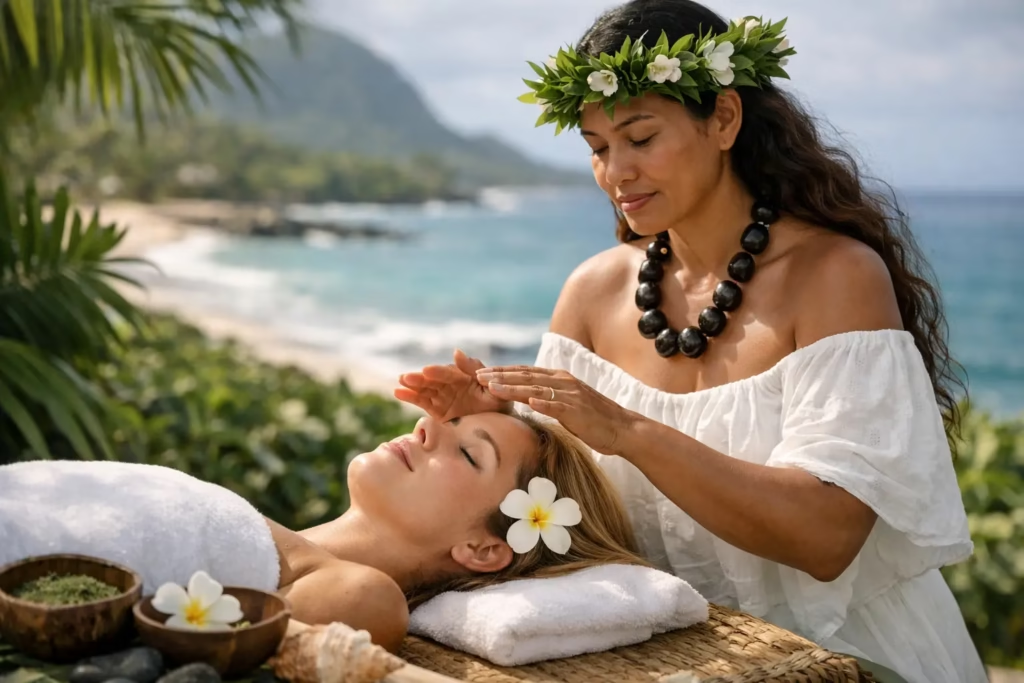
Lomilomi is another term frequently encountered in discussions of Hawaiian healing. It is often presented as massage, but that description can be too narrow. Lomilomi encompasses diverse family and practitioner lineages, approaches to bodywork, and understandings of healing. A respectful practitioner does not treat it as a standardized spa menu item detached from its cultural roots.
At its most thoughtful, bodywork can create an experience many high-functioning women rarely receive: being cared for without needing to perform, explain, organize, or anticipate someone else’s needs. Safe, consensual touch may help a person notice the difference between bracing and softening. It may also bring emotion closer to the surface, especially for someone who has spent years living from the neck up.
That does not mean bodywork is right for everyone at every time. People with trauma histories, health conditions, recent injuries, or a discomfort with touch deserve clear choices, informed consent, and the freedom to pause or decline. Healing is never proven by how much intensity someone can tolerate. A trustworthy space makes room for agency.
Breath, prayer, and the life within the body
The Hawaiian word hā refers to breath. Breath practices appear across many cultures, and it is wise not to flatten them into a single interchangeable wellness exercise. Still, the simple act of bringing attention to breathing can be profoundly orienting. A longer, unforced exhale may signal to the body that this moment is not an emergency. A hand over the heart may help a scattered mind return to the present.
For some practitioners and families, prayer, or pule, is also part of healing. Prayer can be spoken, silent, ancestral, devotional, or held as a moment of reverence. It is not a performance. For a person of another faith, or no faith tradition, the underlying invitation may be recognizable: to become quiet enough to meet life with respect rather than control.
There is no need to borrow words that do not belong to you in order to practice reverence. You might sit by a window, listen to the rhythmic waves, name what is true, and ask for the wisdom to take one honest next step. The form can differ. The quality of attention is what changes the moment.
Why place matters in healing
Hawaiian traditions are inseparable from Hawaiʻi itself: its land, waters, language, communities, and histories. This is one reason cultural respect matters more than simply learning terminology. The land is not scenery. It is relationship, teacher, provider, and responsibility.
For visitors seeking restorative experiences elsewhere, the invitation is not to recreate Hawaiʻi. It is to deepen relationship with the place where you are. On a quiet island shore, for example, the ocean does not need to become a symbol of healing in order to offer something real. Its steady movement can give the nervous system a rhythm to borrow. Forest melodies can interrupt the constant demand for productivity. A private suite can offer enough spaciousness for feelings that have been postponed to arrive without spectacle.
At Serenity By The Sea, this kind of private, one-to-one retreat setting is held as an opportunity for reflection rather than an escape from reality. The goal is not to leave life behind. It is to meet it with more clarity, more capacity, and a more compassionate relationship with yourself.
Choosing a respectful healing experience
If you are considering a Hawaiian-inspired healing session or retreat, discernment is part of the care. Look for practitioners who can speak plainly about their training, lineage, and the limits of what they offer. Notice whether Hawaiian language and practices are treated with respect rather than used as exotic decoration. Ask how consent is handled, especially around touch, emotional release, ceremony, and confidentiality.
It can also help to listen to your own body. Do you feel invited rather than pressured? Are promises measured and human, rather than dramatic? Does the practitioner welcome your questions? A healing relationship should support your self-trust, not ask you to hand it over.
Spiritual and somatic practices can sit beside therapy, medical care, medication, or other forms of support. They do not need to compete. If grief, anxiety, trauma symptoms, or depression are making daily life difficult, qualified mental health or medical support may be an essential part of your care.
A quieter way back to yourself
The most enduring lesson within Hawaiian healing practices may be that wellbeing is not merely an individual project. We are shaped by the relationships we repair, the boundaries we honor, the places we tend, and the moments when we allow ourselves to receive care.
You do not have to solve your whole life in one retreat, one conversation, or one breath. You might begin by noticing where you feel out of harmony, then meeting that awareness with honesty and tenderness. Sometimes that is where the path home quietly begins.