
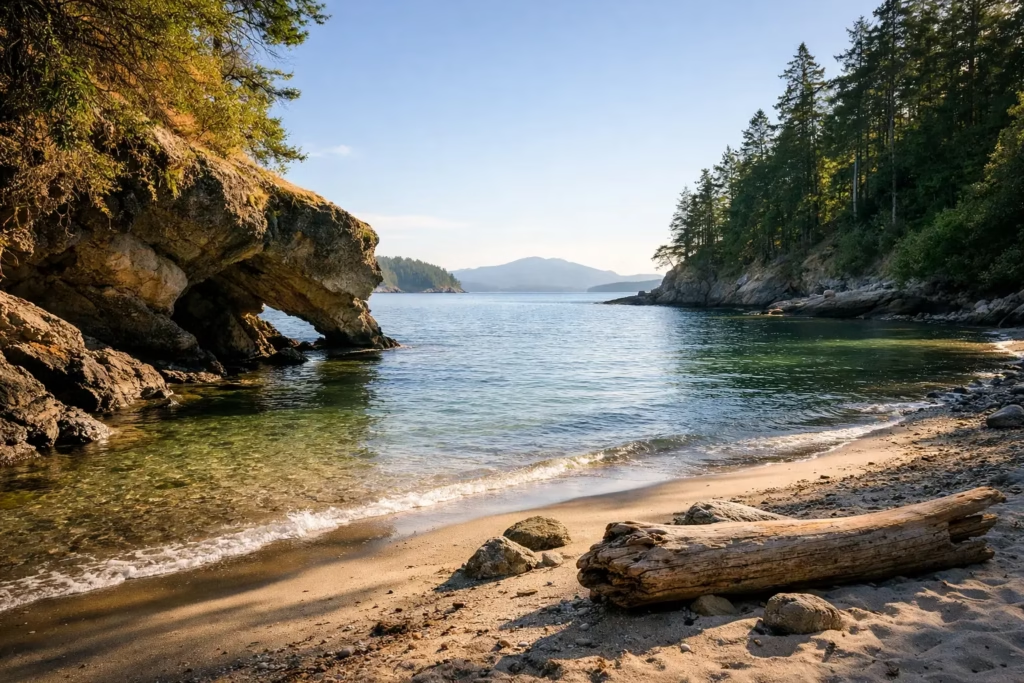
The most memorable hidden beaches on Galiano Island rarely announce themselves with a large parking lot or a row of umbrellas. They may appear at the end of a forest path, below a rocky bluff, or in the quiet pause between high and low tide. What makes them feel hidden is not simply their location. It is the feeling of arriving somewhere that asks very little of you except attention.
Galiano is an island of weathered sandstone, cedar-scented trails, wind-shaped madrones, and wide, shifting views across the Salish Sea. A beach walk here can be restorative in the simplest sense: the nervous system is offered fewer demands. Rhythmic waves create a steady sensory pattern. The horizon gives the eyes a place to rest. The body begins, often without effort, to recognize that it does not have to hurry.
Finding a quiet shore is part local knowledge, part preparation, and part willingness to let the day unfold without turning it into a checklist.
What “Hidden” Really Means on Galiano
On a small island, a hidden beach is not necessarily a secret beach. Many shoreline areas are known and loved by residents, returning visitors, boaters, and families. The more meaningful distinction is whether a place feels uncrowded, respectfully accessed, and spacious enough for you to hear your own thoughts.
Some beaches are easiest to reach from established public parks or signed public access points. Others are visible only from the water, lie beyond uneven trails, or are bordered by private homes. That last detail matters. Galiano’s quietness depends on guests honoring property boundaries, using marked access routes, and not treating online directions as permission to cross land that is not public.
There is also a deeper kind of discretion worth carrying. A small cove can hold only so many people without losing the qualities that made it special. Rather than seeking the most photogenic location, it can be more rewarding to seek a shoreline where you can arrive softly, leave no trace, and let the place remain itself.
Where to Begin Your Search for Quiet Shoreline
Start with public parks and official access points
The most reliable way to find secluded-feeling beach time is to begin with established public land. Galiano’s parks and shoreline trails offer access without the uncertainty of private roads or unmarked paths. From there, a short walk away from the busiest entry point often changes the experience entirely.
The island’s rocky points and pocket coves are especially beautiful when approached with patience. You may not find long stretches of sandy beach, and that is part of the character here. Expect driftwood, smooth stones, tidal pools, shell fragments, seaweed, and sculpted rock shelves. Bring shoes that can handle uneven ground, then give yourself permission to stop often.
Let the tide choose the timing
Tide awareness is essential when exploring hidden beaches on Galiano Island. A shore that feels broad and welcoming at low tide can become narrow or inaccessible as the water rises. Rocky routes may also become slippery, while a cove that looked easy to enter can leave no comfortable way back.
Check the local tide forecast before you leave, and plan to turn around well before the tide begins closing your route. If a beach requires scrambling over rocks, traveling with another person is wise. This is not about anxiety. It is a simple way of caring for yourself so that the experience can stay peaceful.
Low tide offers a particular kind of intimacy. Small worlds emerge at your feet: barnacles closed against the air, anemones gathered in shallow pools, tiny crabs disappearing beneath kelp. Let them be observed rather than handled. The shoreline is not a display. It is a living edge between worlds.
Follow the quieter hours, not only the quieter map
Even a well-loved beach can feel private early in the morning, on a misty weekday, or near dusk when the light softens across the water. If solitude is what you need, timing may matter more than finding an unnamed cove.
Morning has a clean, spacious quality on Galiano. The forest may still be damp, birdsong carries farther, and the ocean can seem almost silver. Late afternoon brings another kind of beauty, especially when the sun warms the sandstone and the day begins to settle. Both invite a slower pace, which is often what the body has been asking for all along.
A Beach Walk That Supports Real Rest
It is easy to bring the pace of ordinary life into a beautiful place. You may arrive carrying unanswered messages, a full calendar, grief, a decision you have been postponing, or the habit of documenting every moment. None of that makes you wrong. It simply means your system may need a little time to recognize that it is safe to soften.
Try arriving without a mission. Sit on a piece of driftwood. Notice where your shoulders are resting. Listen for the difference between the closer sound of water brushing stones and the farther sound of waves moving through the channel. If your mind remains busy, let it be busy for a while. Nature does not require you to become serene on command.
From a nervous-system perspective, gentle sensory experiences can help interrupt the cycle of constant vigilance. The steady rhythm of waves, the irregular texture of rock beneath your feet, and the broad visual field of the ocean may offer cues of safety and orientation. This is not a cure for burnout, grief, or chronic stress. It is something quieter and still valuable: a moment in which the body has an opportunity to come out of performance.
For some people, a solitary beach walk brings clarity. For others, it brings tears, fatigue, or a surprising absence of words. Each response can be understandable. When we stop moving long enough to hear ourselves, what has been waiting underneath may finally have room to be felt.
What to Bring and What to Leave Behind
The island’s secluded shorelines reward simple preparation. Carry drinking water, a warm layer, rain protection, a charged phone, tide information, and shoes with reliable grip. A small sit pad or towel can make a rocky beach much more comfortable, particularly if you hope to stay long enough to read, journal, or simply watch the water.
Leave behind anything that disrupts the quiet or harms the place. Avoid portable speakers, do not build fires unless you are in a clearly permitted area and conditions allow it, and take every piece of trash home with you. This includes food scraps, which can affect wildlife even when they seem harmless.
It is also kind to leave natural treasures where they are. A stone, shell, feather, or piece of driftwood may feel like a keepsake, yet it is part of the shoreline’s intricate habitat and beauty. A photograph, a written note, or the memory of holding it for a moment can be enough.
Respect Is Part of the Experience
Galiano Island is home to people, wildlife, and ecosystems that deserve more than a visitor’s admiration. The island is within the traditional territories of Coast Salish peoples, and the relationship between land and water here carries histories far older than any weekend itinerary.
Respect can be practical. Stay on established trails where possible. Keep a generous distance from seals, birds, and other animals. Avoid feeding wildlife. If you encounter another person seeking quiet, offer the same spaciousness you hope to receive. A low voice, an unhurried passing moment, and a willingness to share a narrow trail all contribute to the atmosphere of care.
This is especially true in places that feel hidden. Their beauty is not an invitation to claim them. It is an invitation to belong more thoughtfully.
Make Room for the Return
A beach visit can be a lovely excursion, but it can also become a threshold between the life you arrived with and the life you return to. Before you leave, pause for a moment at the edge of the water. Ask yourself what feels less urgent than it did an hour ago. Notice what feels true in your body, even if you cannot explain it yet.
At Serenity By The Sea, the cliffs, rainforest, and endless ocean vistas make this kind of pause feel natural. Yet the deeper gift is not confined to a particular view or suite. It is the remembering that your inner life deserves quiet enough to be heard.
The best hidden beach may not be the one no one else knows about. It may be the one where, for a little while, the rhythmic waves help you remember that you do not need to solve everything before you are allowed to rest.