
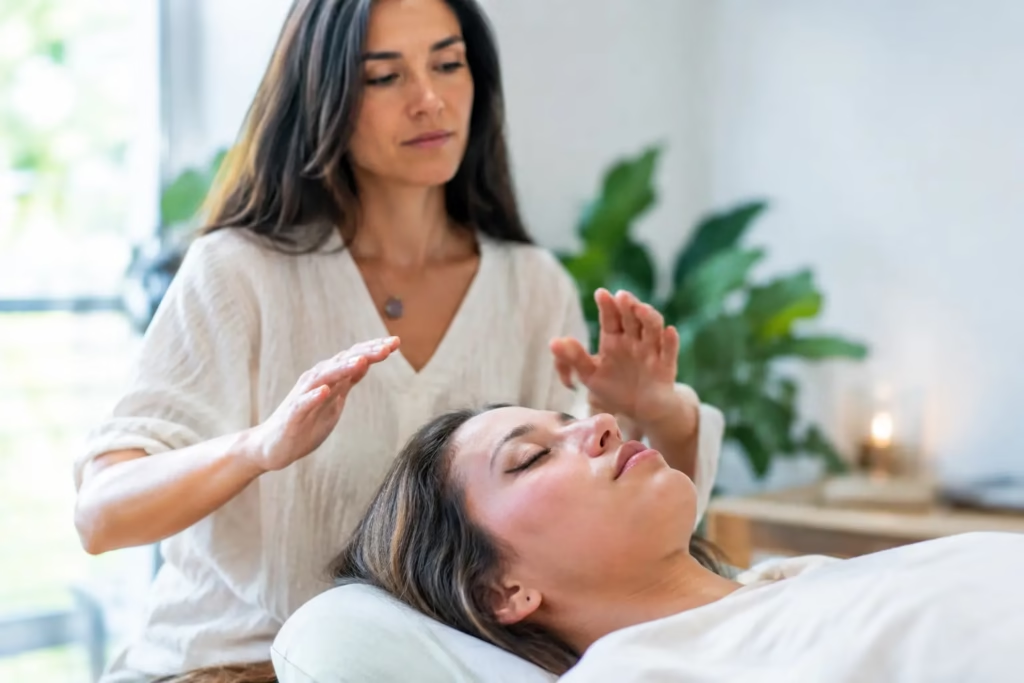
A clearing session rarely begins with a dramatic breakthrough. More often, it begins with a woman sitting quietly, perhaps after a demanding season of work, caregiving, grief, or change, and realizing how much she has been carrying without a place to set it down. The question of what happens during clearing sessions is often really a question about safety: Will I have to relive everything? Will someone tell me what is wrong with me? Can I simply arrive as I am?
A thoughtful clearing session makes room for those questions. It is not about forcing release, fixing a person, or performing spirituality. It is a guided, private process that can help you notice what feels unresolved in your body, emotions, relationships, or inner life, and meet it with greater compassion and choice.
What does “clearing” mean in a healing setting?
The word clearing can mean different things in different traditions. For some, it refers to releasing emotional residue from stressful experiences. For others, it is a spiritual practice of restoring a sense of inner spaciousness, connection, and balance. In a trauma-informed, relational setting, it can also mean gently identifying the patterns that have kept the nervous system on alert long after the original pressure has passed.
None of this requires you to believe that you are broken or carrying something dark. Human beings adapt. We brace after disappointment, become vigilant when life feels uncertain, and learn to push through when rest does not seem available. Those responses may once have helped you survive. A clearing session offers an opportunity to pause and ask whether they are still serving you.
This work may include conversation, breath awareness, gentle body-based practices, sound, visualization, prayerful intention, or Hawaiian healing principles, depending on the practitioner and the guest’s comfort. The form matters less than the relationship: you should feel respected, listened to, and free to participate at your own pace.
What happens during clearing sessions, step by step?
While every session is personal, there is often a natural arc. It begins with arriving rather than achieving. A practitioner may invite you to share what has brought you there: a loss that has changed you, a relationship pattern you cannot quite explain, exhaustion that sleep has not resolved, or the quiet sense that you have become distant from yourself.
You do not need a polished story. Sometimes the most honest starting point is, “I do not know what I am feeling, but I know I cannot keep moving this way.” A skilled guide listens for what is spoken and what is held beneath the words, without rushing to label either.
Creating enough safety to soften
Before deeper reflection, the session should establish grounding. You may be invited to notice the support beneath your body, the quality of your breath, or the sensations present in your hands, chest, stomach, and jaw. This is not a test of mindfulness. It is a way of giving the nervous system information it may have been missing: in this moment, there is time; in this moment, there is choice.
From a neuroscience perspective, chronic stress can narrow attention toward threat and urgency. When the body senses greater safety, it may become easier to access memory, emotion, perspective, and self-compassion without becoming overwhelmed. That does not mean difficult feelings disappear. It means they can be approached in smaller, more workable pieces.
At an intimate retreat, the rhythm of the setting can support this process. The rhythmic waves below the cliffs, forest melodies beyond the windows, and an uninterrupted ocean horizon do not do the healing for you. Yet nature can offer a steadying presence while you listen inwardly, especially if your daily life has left little room for stillness.
Naming what has been carried
As the session unfolds, a guide may help you bring language to an experience that has remained vague or tangled. You might recognize grief beneath irritability, fear beneath overworking, or a deep longing for rest beneath the belief that you must keep proving your worth.
This can be an emotional moment, though it is not always. Some people cry. Others feel warmth, fatigue, tingling, relief, or nothing especially noticeable at first. A quiet session is not a failed session. Much of healing is subtle: an internal permission, a lessening of the inner argument, a new ability to tell the truth without abandoning yourself.
In Hawaiian healing-informed work, attention may also turn toward relationship: the relationship with yourself, your family story, your body, the land, and the life you want to inhabit. The invitation is not to deny what happened. It is to consider whether the past must continue to organize every present-day decision.
Releasing without forcing
“Release” can sound like a single, final event. In lived experience, it is usually more like loosening a tightly held hand. The body may want a deeper breath, a change in posture, tears, movement, stillness, or simply the dignity of being witnessed without being corrected.
A responsible practitioner does not push for catharsis. Intense emotion can be meaningful, but intensity is not the measure of transformation. If a memory or sensation becomes too much, you can slow down, open your eyes, shift your focus, take a break, or stop. Consent remains active throughout the session, not just at the beginning.
Some clearing practices use sound, touch, or hands-on bodywork. Others do not. Touch should always be explained clearly and require your explicit permission. You are welcome to decline any element that does not feel right for you. Your inner wisdom may speak through a clear yes, a hesitant maybe, or a firm no. All three deserve respect.
Making meaning and returning to daily life
Near the close, there is often time to integrate what arose. Rather than assigning a grand interpretation, a guide may ask what feels true now. Perhaps you notice a boundary you need to honor, a conversation you are ready to have, or a gentler way to meet yourself when anxiety returns.
Integration may be as simple as drinking water, walking slowly, resting, journaling, or sitting beside a window as the light changes over the water. The point is not to preserve a special retreat feeling. It is to help the insight become usable in ordinary life: during a difficult meeting, a lonely evening, or the moment you are tempted to override your own needs again.
What a clearing session is not
A clearing session is not a replacement for medical care, mental health treatment, or crisis support. If you are navigating acute trauma symptoms, severe depression, thoughts of self-harm, psychosis, or a significant mental health concern, it is wise to speak with a licensed healthcare professional and choose support appropriate to your needs.
It is also not a promise that every problem will resolve in one visit. Sometimes a session brings immediate relief. Sometimes it reveals a layer that needs patient attention over time. Both experiences can be valuable. Lasting change often asks for continued practice, supportive relationships, and room for the nervous system to learn a different way of being.
Be discerning about any practitioner who makes absolute claims, discourages professional care, pressures you to disclose more than you wish, or suggests they alone can remove your pain. Healing is deeply relational, but it should never create dependency. A good guide helps you return to your own capacity, agency, and discernment.
How to prepare for your session
You do not need to arrive perfectly calm or spiritually certain. It can help to wear comfortable clothing, eat and hydrate in a way that supports you, and leave some unscheduled time afterward if possible. Consider bringing one simple intention rather than a long list of outcomes: “I want to understand why I feel so tired,” or “I want to come home to myself.”
It is equally helpful to share relevant context with your practitioner, including injuries, health conditions, current mental health care, medications, or concerns about touch, sound, or emotional intensity. Clear communication makes the space safer and more personal.
At Serenity By The Sea, this kind of work is held within the privacy of an exclusive two-suite sanctuary, where exquisite hospitality and the wild beauty of Galiano Island create room to exhale. Yet the most meaningful part of any clearing session is not the setting or the technique. It is the moment you begin to recognize that beneath what you have carried, something in you has remained present, intelligent, and worthy of care.
You do not have to force that recognition. You can let it arrive slowly, like the tide returning to shore.