A retreat can sound restorative in theory, yet the details matter when you are carrying more than a packed suitcase. If you are wondering, are retreats private, you may be asking a deeper question: Will I have room to exhale without being observed, scheduled, or expected to share more than I am ready to share?
For many women, privacy is not a luxury add-on. It is part of what makes rest possible. After seasons of leadership, caregiving, loss, change, or simply holding too much for too long, a crowded group itinerary may not be what the nervous system needs. The chance to wake with the ocean, sit quietly beneath the trees, and let your own thoughts arrive can be profoundly restorative.
Still, not every retreat uses the word “private” in the same way. Understanding what it means in practice can help you choose an experience that truly supports you.
Are retreats private? It depends on the retreat model
Some retreats are private in the sense that your bedroom has a door, while the rest of the experience is shared. Meals may happen around a communal table, wellness sessions may be held in groups, and much of the day may follow a set schedule. This can be beautiful for someone seeking connection, new friendships, and the gentle encouragement of a group.
Other retreats are designed around one guest, or one traveling pair, at a time. In this setting, privacy reaches beyond the suite itself. Your pace, your conversations, and your quiet moments are protected. The experience can be shaped around what is present for you rather than asking you to fit a preplanned program.
Neither approach is inherently better. A group retreat can offer warmth and belonging, particularly when isolation has been part of the struggle. A private retreat may feel more supportive when you are in a tender season, value discretion, or are longing to hear yourself again without the noise of comparison.
The most helpful question is not simply, “Is it private?” It is, “What kind of privacy will I actually have?”
Private lodging is only one part of privacy
A beautiful room can offer welcome solitude, but privacy is also shaped by the property, the people, and the rhythm of the stay. A retreat may describe itself as intimate while still accommodating many guests in close proximity. It may offer private rooms but shared outdoor spaces, treatment areas, meals, or common gathering places.
Before reserving, it can help to ask whether you will have a private entrance, your own bathroom, and outdoor areas where you can spend time without feeling on display. Ask how many other guests are on the property and whether there are spaces that are exclusively yours.
At a smaller sanctuary, the setting itself often becomes part of the experience. A suite tucked into rainforest, a private cliffside view, or a bath overlooking the water offers more than a memorable photograph. Nature can give the mind a softer place to land. The rhythmic waves do not ask for an explanation. Forest melodies do not require you to perform wellness correctly. They simply make room.
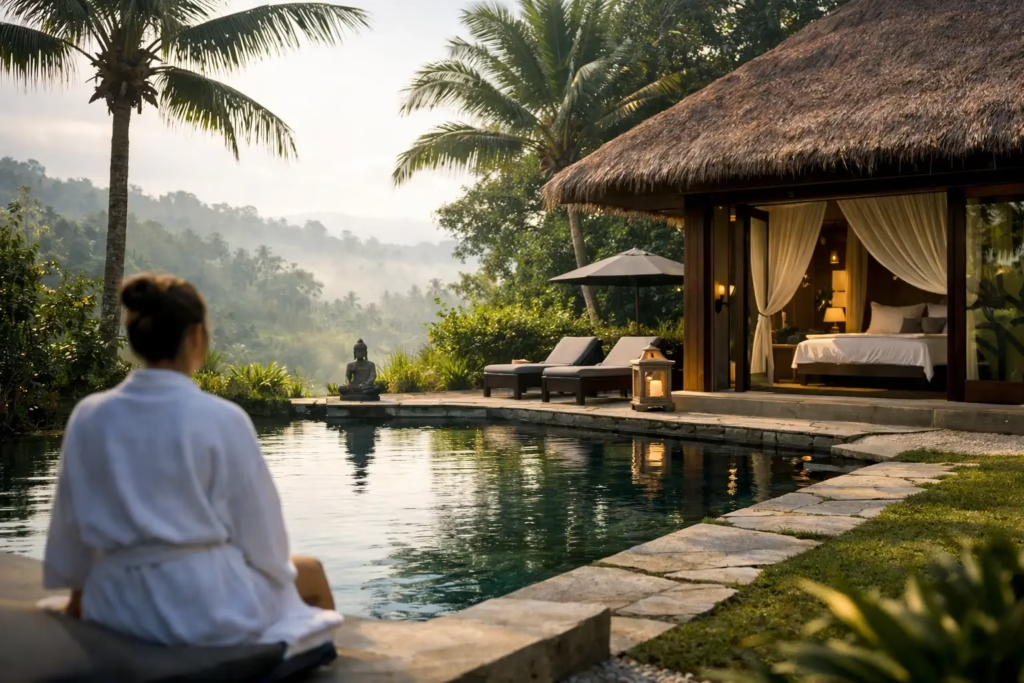
At Serenity By The Sea, the intentionally limited two-suite setting is designed to preserve that sense of spaciousness. Private entrances, ocean vistas, and the surrounding rainforest allow guests to enjoy exquisite hospitality without the atmosphere of a busy resort.
Privacy can include emotional safety
Emotional privacy is often the part people do not think to ask about until they arrive. In a healing-oriented retreat, you may be reflecting on grief, burnout, a relationship, an old pattern of survival, or a question that has no tidy answer. You deserve to know whether those conversations will take place one-to-one or in a group.
One-to-one support offers a different kind of container. There is no pressure to measure your experience against someone else’s breakthrough, articulate your feelings before they have settled, or reveal something because the room has become vulnerable. You can move at an honest pace.
This does not mean a private retreat should feel isolating. The right host is present without being intrusive: available to offer care, practical guidance, nourishment, and thoughtful support, while honoring the moments when you need to be alone. It is the difference between being left alone and being given room.
A trauma-informed approach understands that privacy and choice help the body settle. When we have spent a long time adapting to demands around us, even a well-intended schedule can feel like another thing to manage. Having agency over when to rest, speak, walk, or be quiet can gently remind the nervous system that it is safe enough to come out of vigilance.
What personal healing retreats usually look like
A truly personalized retreat is not a packaged promise of transformation. It is a relational experience that begins with listening. The retreat guide may learn what has brought you there, what support you have already explored, and what feels most important now.
Your days might include private sessions such as life-coaching-oriented reflection, sound healing, clearing practices, movement, body-based awareness, or Hawaiian healing traditions. Yet the quiet spaces between sessions matter just as much. Insight often needs time to settle. A walk along the shore, a journal left open by the window, or an afternoon nap may become part of the work.
The most thoughtful retreats blend care with flexibility. You may arrive believing you need clarity about a decision and discover that what you need first is rest. Or you may expect a quiet escape and find that, once you feel held, a long-postponed truth is ready to be named. A private format leaves room for the experience to be human rather than scripted.
It is also worth holding realistic expectations. A few days away can create meaningful perspective, relief, and a renewed relationship with yourself. It may not resolve every stressor waiting at home. Lasting change usually grows through what happens after the retreat too: the boundaries you practice, the support you continue to receive, and the small choices that honor what you recognized while away.
Questions to ask before choosing a private retreat
Clear questions are not demanding. They are a form of self-trust. A retreat that values your wellbeing should welcome them.
Ask whether accommodations are fully private and how close they are to other guests. Clarify whether meals and wellness sessions are private, shared, or optional. Learn how many people will be on the property, what kind of contact you will have with the host, and whether the daily schedule can adapt to your energy.
You may also want to ask about confidentiality. If you are receiving personal support, how are your conversations held? Is there an intake process? What training or approach informs the retreat guide’s work? If you have a specific health concern, are there clear boundaries around what the retreat can and cannot provide?
Practical comfort deserves attention as well. Privacy feels different when basic needs are anticipated. Consider transportation, ferry timing, food preferences, accessibility, weather, cell service, and how much independence you want during your stay. An island sanctuary can feel wonderfully removed, but the right fit includes knowing what that remoteness asks of you.
Solitude without disconnection
There is a common fear beneath the wish for privacy: What if I go away and feel lonely? That concern is tender and reasonable. Solitude does not always feel peaceful at first, especially for those accustomed to keeping busy or caring for others.
A well-held private retreat creates a middle ground. You are not required to socialize, but you are not unseen. There is a caring presence nearby, a prepared space, and an environment that quietly invites reconnection. The ocean continues its rhythm. The trees remain rooted. Your own inner life has permission to be as it is.
Privacy, at its best, is not about shutting the world out. It is about creating enough quiet to notice what has been asking for your attention. In that quiet, you may remember that rest is not something to earn, and that the part of you seeking renewal has been wise all along.