
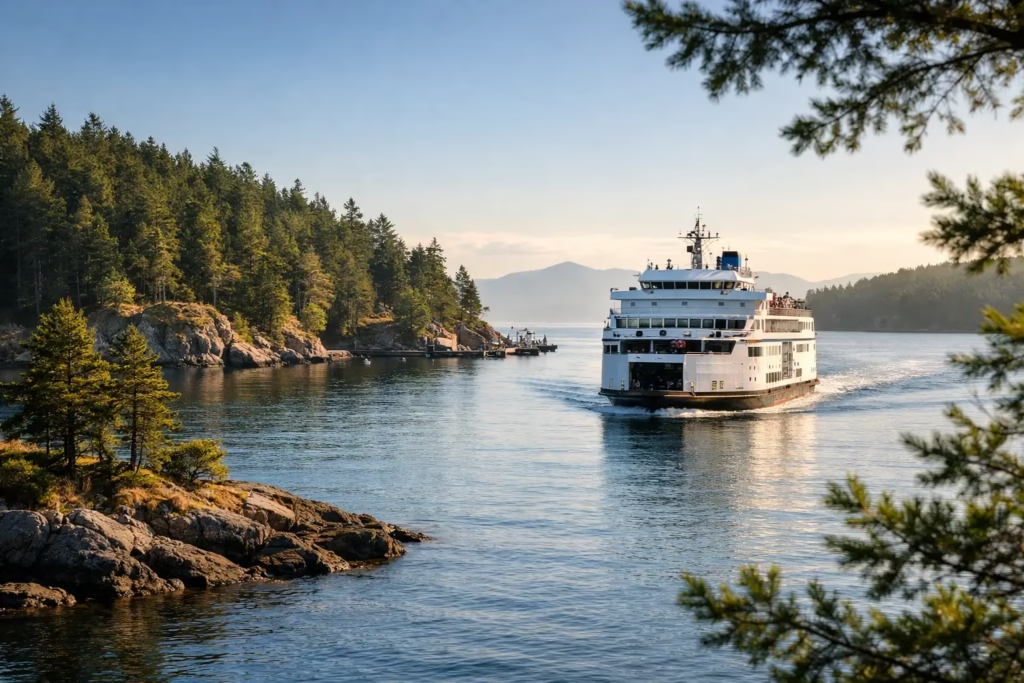
The Galiano Island ferry is more than transportation from the mainland. For many guests, it is the first true threshold of their stay: a chance to leave traffic, screens, and familiar demands behind as the Salish Sea opens around them. The rhythmic pull of the water, the changing light on the islands, and the simple act of having nowhere else to be can begin to soften the pace long before you reach the shore.
For women arriving after a demanding season, that shift matters. The ferry does not erase what you have been carrying, nor does it need to. It simply creates a little space around it. With a bit of practical planning, the journey to Galiano can become a gentle beginning rather than another item to manage.
Where the Galiano Island ferry departs
Most travelers coming from Vancouver begin at the Tsawwassen ferry terminal, south of the city. From there, BC Ferries operates sailings to Sturdies Bay on Galiano Island. Sturdies Bay is Galiano’s main ferry terminal and a small, welcoming point of arrival, with the island’s quiet roads, forested landscape, and coastal coves unfolding beyond it.
The crossing time can vary by sailing because some routes may stop at other Southern Gulf Islands along the way. Directer sailings are often shorter, while multi-stop sailings naturally take longer. Rather than treating this as an inconvenience, it can help to see the route as part of the experience. Each stop offers another view of island life: a small terminal, a hillside of evergreens, a dock appearing and disappearing behind the wake.
Schedules change seasonally and can be affected by weather, vessel changes, and operational needs. Before setting your plans, check the current sailing schedule for your travel date, including the return journey. This is particularly wise during summer weekends, school breaks, statutory holidays, and long weekends, when island travel is at its busiest.
Should you reserve the ferry?
If you are bringing a vehicle, a reservation is often a welcome form of care for your future self. Galiano is not an island that rewards rushing, and knowing your space is held can make the drive to Tsawwassen feel considerably lighter. Reservations are especially helpful when your arrival time is connected to a retreat session, a dinner plan, or a limited window for settling into your accommodation.
That said, a reservation is not always necessary. Foot passengers and travelers with flexible schedules may prefer the freedom of arriving without one, particularly outside peak periods. The right choice depends on how much certainty you need and how open your itinerary can be.
A reservation generally holds a place on a particular sailing, but it does not remove the need to arrive by the required check-in time. Give yourself room for Vancouver traffic, airport-area congestion, and the possibility that your navigation app has underestimated the final stretch. Beginning the trip tense and hurried can make even a beautiful crossing feel like an extension of the week you hoped to leave behind.
Driving, walking, or arriving without a car
A car offers the greatest freedom on Galiano Island. The island is long and rural, and its beaches, viewpoints, cafés, and trailheads are spread out. Having your own vehicle makes it easier to move at your own pace, carry groceries, and follow an unplanned impulse to stop where the water catches your eye.
Yet a car is not essential for every stay. Guests who are seeking deep rest, attending a personalized retreat, or planning to remain close to their suite may find that arriving as a foot passenger supports a more spacious experience. It removes the logistics of loading, parking, and navigating unfamiliar roads. Depending on where you are staying and what you hope to do, taxis or arranged transportation may be available, though these services are limited and should be organized well in advance.
There is a meaningful trade-off here. A vehicle gives you autonomy; coming without one can invite a quieter form of surrender. Neither is more virtuous. Consider what would feel most supportive for the season you are in.
What to bring for the crossing
The ferry has indoor seating and outdoor deck space, and the weather can shift quickly on the water. Even in summer, the wind may feel cool once the vessel leaves the terminal. Bring a light layer, water, any snacks that help you feel grounded, and a small bag with what you may want during the sailing rather than leaving everything in your vehicle.
If motion sensitivity is part of your experience, choose a seat where you feel steady, keep your gaze toward the horizon when you can, and allow extra time so you do not board in a state of urgency. Most crossings are calm, but the sea has its own character. A little preparation is simply kindness to your nervous system.
You may also want to bring a book, a journal, or nothing at all. There is no requirement to make the ferry crossing productive. For someone used to filling every pause, standing outside for ten minutes and watching the islands pass can be unexpectedly restorative.
Let the crossing become part of the retreat
There is a reason transitions can feel tender. The body often needs more time than the mind to understand that a demanding chapter, meeting, caregiving responsibility, or long period of holding it together has paused. A ferry crossing offers a physical change of place that can help signal this shift.
From a nervous-system perspective, moments of safety are often built through simple, repeated cues: a slower breath, a view that extends beyond the next task, the sound of water, the absence of immediate demands. Nature does not ask you to perform wellness correctly. It offers rhythm, distance, and perspective. You may notice your shoulders lower. You may notice nothing at all until later. Both are entirely human.
If it feels right, make one quiet intention for the journey. Not a demand for transformation, but a gentle question: What have I been carrying that I no longer need to carry alone? Let the answer remain unfinished. You do not have to solve your life between Tsawwassen and Sturdies Bay.
At Serenity By The Sea, the ocean-facing setting, rainforest stillness, and exquisite privacy are designed to meet guests after that crossing with room to exhale. Whether you arrive for a private healing retreat or a secluded coastal stay, the island itself becomes part of the invitation: to listen more closely to what has been asking for your attention.
Planning your return without losing the softness
The return ferry deserves the same consideration as your arrival. Reserve early if your timing is fixed, particularly when traveling with a car. Build in enough time to check out without turning the final morning into a scramble, and remember that ferry schedules are not merely a logistical detail on Galiano. They shape the rhythm of the island.
Many guests find it helpful to leave a little space on the other side of the crossing as well. Avoid, if possible, scheduling an intense meeting the moment you return to Vancouver. A retreat, a solitary weekend, or even a few days near the ocean may leave you clearer about what needs to change, but clarity often benefits from a quiet landing.
The ferry ride back can be a place to notice what has shifted, without forcing a conclusion. Perhaps you feel rested. Perhaps you feel emotional, open, or uncertain. Perhaps the only difference is that you can hear yourself a little more clearly. Let that be enough. Some journeys begin not when you arrive on an island, but when you give yourself permission to return home differently.