
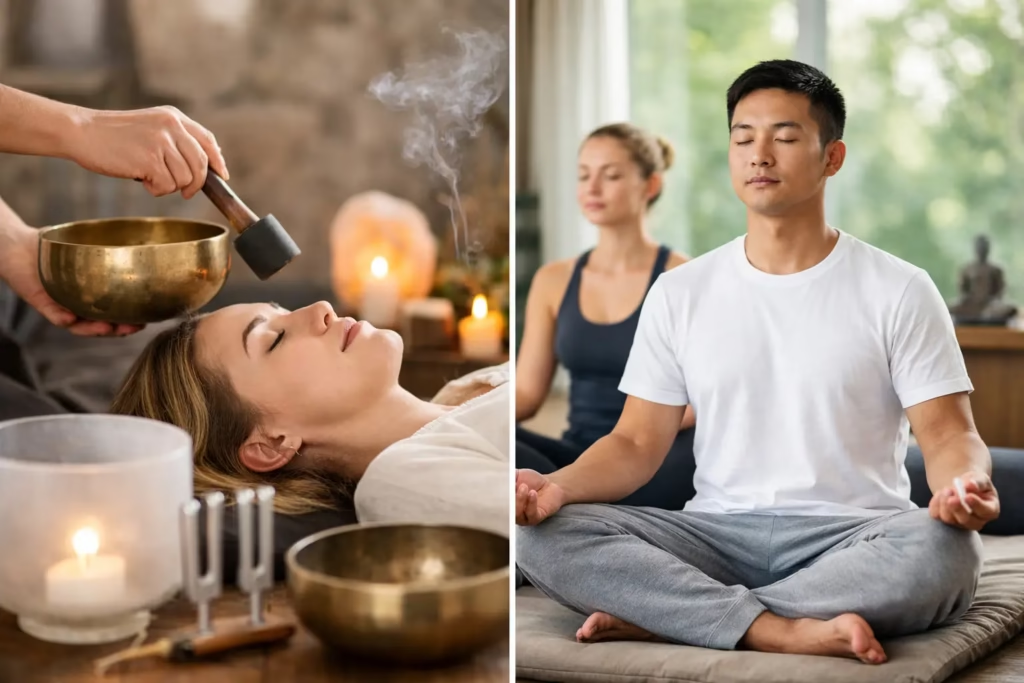
There are moments when sitting quietly with your own thoughts feels like a homecoming. And there are moments when silence feels too spacious, when the mind keeps rehearsing what happened, what needs doing, or what might go wrong. The conversation around sound healing versus meditation is not really about choosing the better practice. It is about noticing what kind of support your whole system is ready to receive.
For women carrying full calendars, complex responsibilities, grief, change, or the quiet exhaustion of always being the capable one, this distinction can matter. Both practices can create a pause from the momentum of daily life. Yet they offer that pause through different doorways: one through intentional attention, the other through vibration, rhythm, and receptive listening.
Sound Healing Versus Meditation: The Essential Difference
Meditation is a broad family of practices that invites awareness. You might follow the breath, repeat a phrase, observe thoughts without chasing them, move slowly, or rest your attention on sensations in the body. The aim is not necessarily to empty the mind. More often, it is to develop a different relationship with what arises there.
Sound healing, often experienced as a sound bath, uses instruments such as crystal bowls, gongs, chimes, drums, or voice to create an immersive listening experience. Rather than asking you to direct attention with much effort, sound gives the attention somewhere to land. The tones, pauses, and changing textures can become a gentle anchor when inner quiet feels difficult to access alone.
Neither practice has to be mystical to be meaningful, and neither needs to be reduced to a technique. From a nervous system perspective, both may support a shift from constant doing toward a state of greater rest and awareness. The experience varies widely from person to person, depending on stress levels, sensory preferences, past experiences, and the setting itself.
What Meditation May Offer
Meditation can be especially supportive when you want to strengthen the capacity to notice your inner life with more steadiness. A regular practice may help you recognize the first signs of tension, worry, resentment, or depletion before they become overwhelming. It can create a little more space between a difficult thought and the impulse to believe, fix, or act on it.
This is not always immediately relaxing. For someone accustomed to staying busy in order to cope, stillness can initially reveal what activity has kept at a distance. Thoughts may become louder before they become less compelling. Emotions may surface. That does not mean meditation is failing. It may simply mean that the system is meeting what it has not had time or safety to feel.
A gentle meditation practice can be as simple as noticing three breaths while looking out at the water, feeling your feet on the ground, or placing a hand over your heart before a difficult conversation. It does not require a perfect posture, a silent mind, or an hour set aside from real life.
When meditation can feel like too much
There are seasons when inward focus feels agitating rather than settling. Acute grief, trauma activation, panic, sleep deprivation, and intense burnout can make closed-eye silence challenging for some people. This is not a personal failure or a lack of discipline.
In those moments, a more externally supported practice may be kinder. Walking meditation, guided meditation, breath awareness with the eyes open, or simply listening to the natural world can offer a steadier starting point. A practice should help build capacity, not become another place where you feel you must perform wellness correctly.
What Sound Healing May Offer
Sound healing gives the mind a living landscape to follow. The low resonance of a bowl, the shimmer of chimes, or the pulse of a drum can make it easier to release the effort of managing every thought. For many people, especially those who find traditional meditation frustrating, the experience can feel more accessible because they are receiving rather than striving.
There is a practical reason this can feel soothing. Gentle, predictable sound may give attention a single sensory focus, which can interrupt habitual mental looping. Slow breathing, a comfortable resting position, a sense of privacy, and the presence of a skilled facilitator often work alongside the sound itself. It is rarely only one element that creates the feeling of settling.
A sound bath can also be deeply emotional. Certain tones or rhythms may bring up memories, tears, spaciousness, irritation, or unexpected relief. These responses are not proof that a particular frequency has fixed or released something. They are human responses to slowing down in a setting where there may finally be room to feel.
It is wise to hold broad claims about sound with discernment. While many people experience sound-based practices as calming and restorative, they are not a replacement for medical, mental health, or trauma care when that care is needed. Sound can be a companion to healing, not a promise of a particular outcome.
When sound may not be the right fit
Sound is not neutral for every nervous system. Some people are sensitive to volume, reverberation, unpredictable tones, or particular instruments. Those with migraines, tinnitus, sensory processing differences, or trauma histories may prefer a quieter session, softer instruments, a seat near an exit, or the choice to step outside.
A thoughtfully held sound experience makes room for choice. You can keep your eyes open, shift positions, use ear protection, leave early, or simply listen from a distance. Safety often begins with remembering that your body gets a vote.
Choosing What You Need Right Now
The most useful question is not, “Which practice is more powerful?” It may be, “What would feel supportive today?” If your mind feels crowded and you are tired of trying to make it quiet, sound may offer a softer entry point. If you are seeking clarity around a recurring pattern or want to cultivate a steady daily ritual, meditation may be the more direct companion.
Sometimes the answer is both. A sound bath can help settle the surface noise, making it easier to sit in reflection afterward. Meditation can deepen your ability to notice how sound moves through your body and emotions. One practice may open the door; the other may help you remain present once you are inside.
Consider your temperament, not just your aspirations. A person who feels nourished by structure may appreciate a simple daily meditation. Someone who has spent years pushing through discomfort may benefit from a more receptive, sensory practice. Neither preference says anything about your spiritual depth or your willingness to grow.
The Setting Changes the Experience
The environment around a practice matters more than we sometimes acknowledge. It is easier to soften when there is enough privacy, warmth, time, and permission not to rush back into the next demand. The rhythmic waves below a cliff, forest melodies beyond an open window, and a place to rest afterward can become part of the practice itself.
This is why a retreat setting can offer something different from listening to a recording between meetings. It is not that transformation lives in a beautiful place alone. Rather, the body often responds to the message that it does not have to remain on alert. At Serenity By The Sea, sound and contemplative practices are held within an intentionally intimate environment, where nature, rest, and personal attention can support reflection without asking you to become someone else.
Let the Practice Be a Relationship
There is no prize for meditating through discomfort or for seeking sound when what you truly need is a conversation, a nap, a nourishing meal, or professional support. The deeper invitation is to become more honest about what helps you return to yourself.
You might begin with ten quiet minutes of listening, without needing to name it sound healing or meditation. Notice whether your jaw softens, whether your breath becomes more available, whether something inside you feels less alone. Let that small recognition be enough. Your inner wisdom does not always arrive as an answer. Sometimes it arrives as the first gentle exhale you have taken all day.