A woman can arrive at a healing session carrying a full calendar, a private grief, and the familiar habit of holding everything together. She may not be looking for a belief system. She may simply want to exhale. So, are Hawaiian healing sessions spiritual? Often, yes – but not always in the way people expect.
For some, spirituality means prayer, ancestry, and a felt relationship with the natural world. For others, it means returning to the body, making room for emotion, or remembering that they are more than the roles they have been asked to perform. A thoughtful Hawaiian-inspired healing experience can make room for both perspectives without requiring anyone to adopt a particular faith or worldview.
What “spiritual” can mean in Hawaiian healing
Hawaiian healing is not one single practice. It is a broad phrase sometimes used for modalities influenced by Native Hawaiian values and traditions, including lomilomi bodywork, hoʻoponopono practices, pule, breathwork, chanting, and approaches centered on relationship, balance, and care for life.
Within traditional Hawaiian worldviews, spirituality is often woven into daily living rather than separated into a distinct category. Relationships with family, ancestors, land, ocean, body, and spirit can all be understood as connected. Concepts such as aloha, hoʻoponopono, and mālama are not simply wellness language. They carry cultural depth and meaning that deserve care, context, and respect.
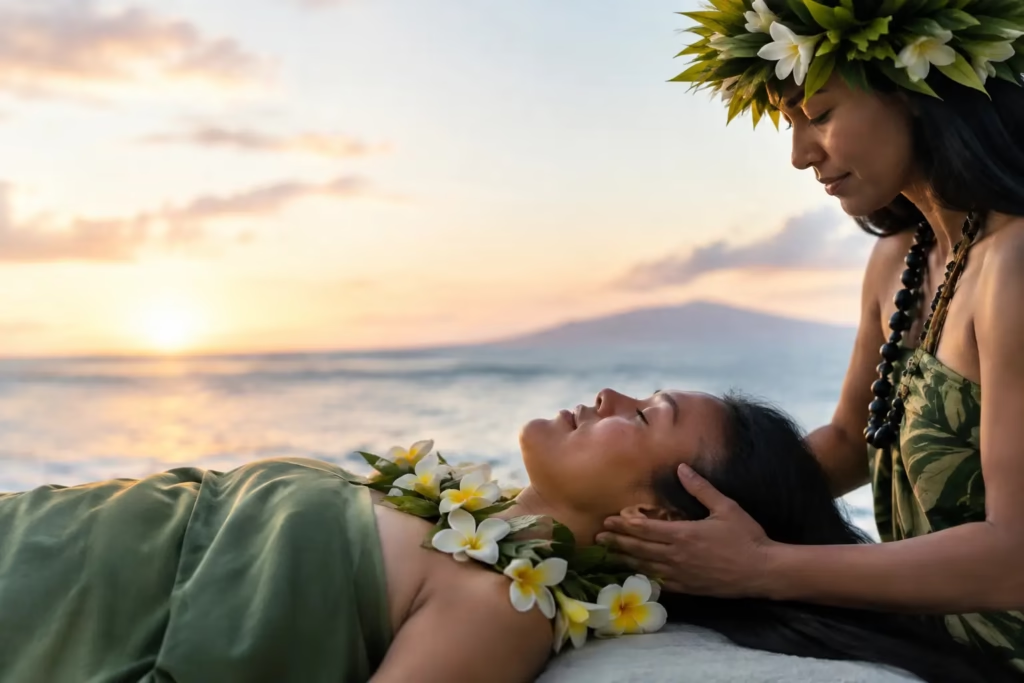
That does not mean every session will include prayer, ceremony, or explicit spiritual teaching. A practitioner may offer quiet bodywork with an emphasis on presence and compassionate attention. Another may invite intention-setting, breath, forgiveness work, or a closing ritual. The experience depends on the practitioner’s training, lineage, integrity, and the way they explain their approach.
Are Hawaiian healing sessions spiritual for everyone?
The more honest answer is that spirituality is partly shaped by the person receiving the session. Two people can have the same treatment and describe it very differently. One may say she felt a spiritual release. Another may say her shoulders finally softened after months of tension. Both experiences can be real.
The nervous system does not need a spiritual explanation to respond to safety, warmth, slow touch, rhythmic sound, or time away from constant demand. When the body senses less threat, breathing may deepen, muscles may release, and feelings that have been held at a distance may become easier to notice. This can feel profound, especially for someone who has spent years functioning in survival mode.
At the same time, reducing every meaningful experience to biology can miss something tender. Many people recognize a sense of connection during a healing session: connection to their own inner knowing, to nature, to a loved one they are grieving, or to a larger mystery they do not need to define. A respectful practitioner does not tell a guest what that experience must mean.
Spirituality is an invitation, not a requirement
A well-held session leaves room for consent, curiosity, and personal boundaries. You should be able to say, “I prefer a secular session,” “I am open to intention-setting but not prayer,” or “Please explain what this practice means before we begin.” Your comfort is not a barrier to healing. It is part of the foundation.
This matters especially for women who have felt dismissed, pressured, or disconnected from their own voice in other settings. Healing work is not an opportunity for someone else to assign meaning to your life. It is a space where you can listen more closely to what is already true for you.
The difference between reverence and performance
The growing popularity of Hawaiian healing has created a need for discernment. Beautiful words, tropical imagery, and ceremonial music do not automatically make an experience culturally grounded or emotionally safe. A session can borrow the appearance of spirituality while offering little understanding of the traditions it references.
Respectful practice begins with humility. A practitioner should be clear about what they are trained in, what cultural teachings inform their work, and what they do not claim to represent. They should avoid presenting sacred traditions as exotic accessories or promising to heal trauma, illness, or relationships through one powerful session.
It is also wise to be cautious of anyone who insists that resistance means you are “blocked,” tells you to stop medical or mental health care, or pressures you to disclose more than you are ready to share. Deep healing can be emotional, but it should never require surrendering your discernment.
If you are drawn to Hawaiian healing, consider asking a few gentle questions before booking. You might ask how the session is structured, whether touch is involved, how consent is handled, and whether there are spiritual or cultural elements. You can also ask what happens if strong feelings arise. A grounded response will feel spacious rather than defensive.
Why place can deepen a healing experience
Some experiences become more meaningful because of where they happen. A quiet room, the rhythmic waves below a cliff, rain moving through a forest canopy, and uninterrupted time can help a busy mind loosen its grip. Nature does not demand that you explain yourself. It offers a steadier pace in which to notice what has been waiting for your attention.
For this reason, a healing session on an island retreat can feel spiritual even when no formal ritual is used. The setting may support a kind of remembering: that the body belongs to the living world, that rest is not a reward, and that clarity often arrives after the nervous system has had time to settle.
At Serenity By The Sea, Hawaiian healing practices are approached as part of a deeply personal, one-to-one retreat experience, held alongside somatic awareness, emotional reflection, and the restoring presence of ocean and forest. The purpose is not to give someone a new identity or prescribe a spiritual belief. It is to create private, attentive conditions in which she can meet herself with greater honesty and care.
What a meaningful session may feel like
Not every session brings tears, visions, or a dramatic breakthrough. Sometimes the most meaningful change is quieter. You may sleep deeply that night. You may notice that a conversation you have been avoiding feels more possible. You may leave with a clearer sense of what needs to change, or simply with the relief of not having to solve everything at once.
There can also be discomfort. When the body slows down, emotion sometimes becomes more available. This does not mean something has gone wrong, nor does it mean every difficult feeling is evidence of transformation. A skilled facilitator will help you pace the experience, stay oriented, and choose what feels right for you.
The value of a session is not measured by intensity. It is measured by whether you feel respected, more connected to yourself, and better able to carry what you discovered into ordinary life.
Let your own discernment be part of the healing
If you are curious about a Hawaiian healing session, you do not need to arrive with the right language or a polished spiritual practice. You can arrive tired, uncertain, hopeful, skeptical, or all of these at once. What matters is that the space honors your humanity, the traditions it draws from, and your right to choose what resonates.
Perhaps spirituality, in this setting, is less about reaching for something far away. Perhaps it is the quiet moment when your breath returns, the ocean keeps moving, and you remember that there is still a wise and living part of you beneath all you have been carrying.