
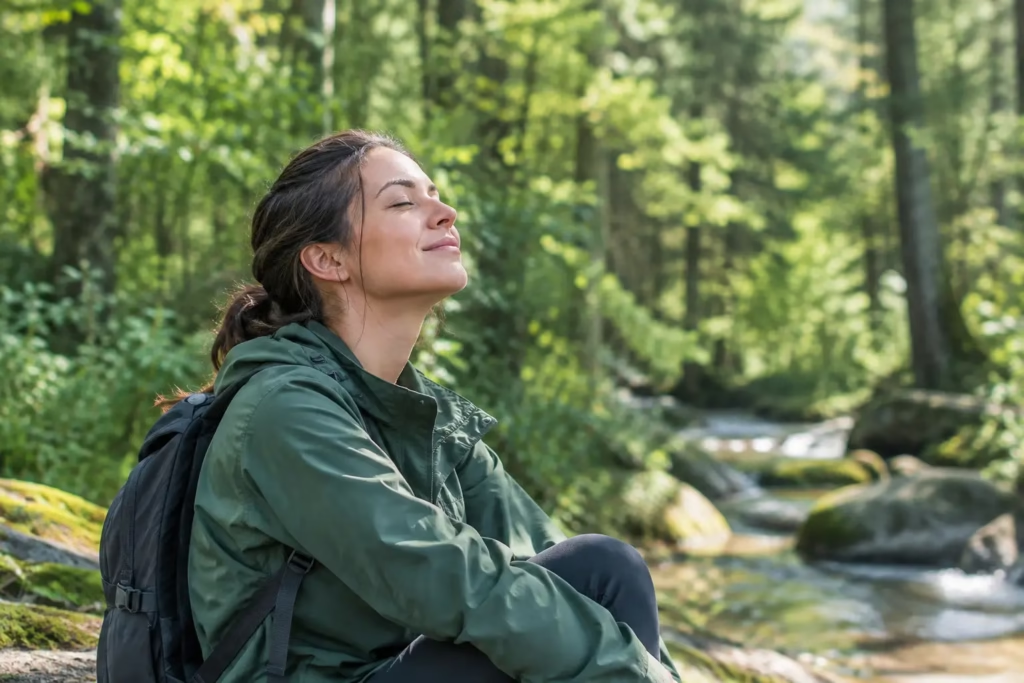
There is a particular kind of tiredness that a good night of sleep does not always touch. It can live beneath a full calendar, a capable exterior, and the habit of being the one who holds everything together. A forest bathing retreat offers something quieter than an escape: protected time to let the body recognize that, for this moment, it does not need to be on guard.
This is not about hiking farther, achieving a wellness goal, or having a profound realization on demand. It is about moving slowly enough to notice the rain on cedar needles, the changing texture of the ground, the rhythm of your own breath beside the forest’s many small sounds. For women carrying burnout, grief, transition, or a growing distance from themselves, that simplicity can be deeply meaningful.
What Forest Bathing Actually Invites
Forest bathing is often associated with the Japanese practice of shinrin-yoku, which translates simply as taking in the forest atmosphere. The practice is less about exercise than relationship. Rather than treating nature as scenery to pass through, you allow your senses to become part of the place you are in.
A forest bathing retreat creates the conditions for this relationship to unfold without the usual interruptions. There may be an unhurried walk, time sitting beneath the canopy, gentle sensory invitations, journaling, silence, or a conversation that helps give shape to what has been felt. The form can vary. What matters is the pace: slow enough for your attention to soften and your inner world to become easier to hear.
For many people, the first surprise is how difficult slowness can feel. A mind accustomed to planning may keep making lists. The body may initially feel restless. Neither response means you are doing it wrong. They are often signs that you have finally entered a space where nothing is asking you to perform.
Why the Nervous System Responds to the Forest
Our nervous systems are always reading the environment. Harsh light, notifications, traffic, time pressure, and unresolved demands can keep the body in a subtle state of readiness, even when there is no immediate danger. Over time, that vigilance can make rest feel unfamiliar.
Nature does not erase life’s difficulties. Yet the sensory experience of a living landscape can offer a different set of cues: irregular birdsong, moving branches, layered greens, salt air, and the steady sound of water. Researchers have explored how time in natural settings may support lower stress, more settled attention, and a greater sense of emotional well-being. The research is useful, but it does not need to become another demand to optimize yourself.
Often, the most honest benefit is more modest and more precious. Your shoulders lower without being told. Your thoughts become less crowded. A feeling you have been carrying finds room to move. You remember that your body is not a problem to solve, but a wise companion that has been trying to protect you.
This is where a trauma-informed approach matters. Nature can be soothing, but quiet can also bring forward feelings that busy life has held at bay. A meaningful retreat does not insist that every moment be peaceful. It makes room for tenderness, resistance, tears, relief, and the ordinary uncertainty of being human. Personal support can help you meet what arises with care rather than judgment.
A Forest Bathing Retreat Is Not a Quick Fix
It is tempting to imagine that a weekend among the trees will permanently resolve exhaustion or clarify every next step. Sometimes people leave with a strong sense of renewal. Sometimes the deeper gift is subtler: a clearer awareness of what needs tending when they return home.
Lasting change usually asks for more than a beautiful setting. It may involve boundaries, grief work, honest conversations, medical or therapeutic support, rest, or a different relationship with the inner voice that keeps saying you should be able to handle more. A retreat can be a beginning, a pause, or a meaningful threshold. It is not a substitute for the ongoing care some seasons require.
That is also why the most nourishing experience is rarely the most packed itinerary. If every hour is programmed, the mind may simply find a more scenic way to stay busy. Spaciousness allows the insights of the day to settle into the body. It leaves room for an afternoon nap, a long bath, or the unplanned moment when you realize you have not checked the time in hours.
The Coastal Forest Offers Its Own Kind of Medicine
On Galiano Island, rainforest and ocean meet in a way that naturally changes the pace of a day. The forest offers shelter, shadow, and the earthy fragrance of moss and cedar. Beyond it, rhythmic waves and endless ocean vistas widen the field of attention. One landscape invites you inward; the other reminds you that life is larger than the story currently occupying your mind.
At Serenity By The Sea, this meeting of cliffside ocean and forest is part of the experience rather than a backdrop. Private accommodation and exquisitely quiet surroundings make it possible to step away from the social pressure that can accompany larger retreats. For some guests, solitude is where the nervous system first begins to settle. For others, one-to-one, heart-centered support provides the safety needed to be alone with what is true.
There is no universal right balance. Someone moving through acute burnout may need fewer conversations and more rest. Someone at a crossroads may welcome gentle reflection and personalized guidance. The value lies in choosing an experience that honors your actual capacity, not the version of you that believes she must make every moment productive.
How to Prepare Without Turning It Into Another Project
You do not need special knowledge to receive what a forest bathing retreat has to offer. Comfort is more useful than perfection. Bring layers, footwear that lets you walk steadily, a water bottle, and something to write in if writing helps you listen. Consider leaving some space in your schedule before and after the retreat instead of rushing from one obligation to the next.
It can also help to arrive with a question rather than an expectation. You might quietly ask: What have I not had time to feel? Where am I asking too much of myself? What would it mean to trust my own pace? You do not need to force an answer. A sincere question can remain open as you walk.
If you use a phone for photographs, consider choosing one intentional moment for it rather than documenting the entire experience. The point is not to prove that you rested. It is to let your attention belong to you again. Notice what you are drawn toward: a fern unfurling, water moving over stone, the warmth of a mug in your hands. These small moments are not insignificant. They are often where reconnection begins.
Carrying the Experience Home
The return to ordinary life can be tender. Within a day, emails, caregiving, travel, and familiar routines may begin asking for your attention again. Rather than trying to preserve the retreat exactly, bring home one or two practices that feel genuinely possible.
That could be ten quiet minutes outside before opening your laptop, a slower walk without headphones, or pausing at a window to take three unhurried breaths. The practice is not the ritual itself. It is the willingness to meet yourself before the world tells you who you need to be.
A forest does not hurry its healing. It changes through weather, seasons, decay, and new growth, with no need to explain its pace. You are allowed the same patience. Let the memory of trees, salt air, and spacious silence be a gentle reminder: beneath all that asks for your attention, there is still a place within you that knows how to come home.